Business & Industry
188
Business & Industry


7 May 2026
News
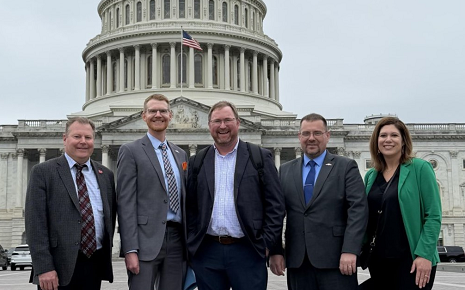
Eric Fosheim, Economic Development Manager of the REED Fund, flew to Washington, D.C., in April 2026 to represent the National Rural Economic Developers Association (NREDA) Rural Issues Committee. The 10-person cohort met with elected officials and other department representatives to advocate for federal programs that support rural communities.
“Federal programs contribute significantly to the vitality of our communities,” says Fosheim. “They support infrastructure improvements, job creation through economic development, and essential amenities like hospitals.”
One in five Americans (156 million people) live in rural areas, and cuts to federal programs can have immediate impacts on their lives. This is why the NREDA team traveled to meet with legislators to discuss their goals for continuing funding and even expanding access to resources.
Electric cooperatives were built on a foundation of helping rural communities gain access to the same utilities already available in big cities. Today, they continue to serve their members with quality service and affordable rates. Part of their work involves participation in groups like the NREDA to advocate for additional resources.
For example, many electric co-ops have their own revolving loan funds, which are funded through USDA programs. It made sense for the NREDA to meet with USDA teams and speak with various senators and representatives.
“Meeting with the USDA was one of my trip highlights,” says Fosheim. “These folks are the D.C. extension of our state agencies, and we met with them previously. It was fun to continue the discussions, and they were very engaged in what we had to say.”
The NREDA team met with Karl Elmshaeuser, Administrator of the Rural Utilities Service (RUS), and Victoria Collin, Deputy Administrator for the Rural Business-Cooperative Service, along with the rest of her team.
Additionally, the NREDA cohort met with multiple elected officials, including Senator Mike Rounds, the staff of Senator John Thune, and the staff of Representative Glenn Thompson (R-Pennsylvania), Chair of the Agriculture Committee.
The NREDA also scheduled meetings with partner agencies, including the Small Business Administration (SBA), National Association of Development Organizations (NADO), and the National Association of Counties (NACo).
The NREDA cohort came prepared with a handout for their representatives so they could focus on key problems affecting residents back home. These focused on a variety of economic and quality-of-life issues that limit growth in rural communities. A few key talking points were:
Rural communities are responsible for energy production, agriculture, and manufacturing in the United States. When rural towns and counties contract, so does the fiber of the American supply chain.
NREDA doesn’t believe in bringing problems to elected officials without also offering solutions. The cohort highlighted specific bills that invested in workforce programs, expanded healthcare services, and supported rural communities. These include:
Workforce & Small Business
Housing
Infrastructure
Healthcare
Capital Access
“It’s exciting to see several bills working through Congress that support rural vitality,” says Fosheim. “We know every proposed bill won’t become a law, but these proposals show us that our elected officials aren’t forgetting the rural communities that make up the backbone of America.”
A few days in Washington, D.C., creates invaluable opportunities to meet with elected officials and various partner agencies. However, the team at the REED fund works year-round to support its member cooperatives and the people and businesses within them.
Learn more about REED and how it invests in various projects and activities across South Dakota. From increasing childcare access to assisting with housing inventory, each project makes life a little better for Americans who choose rural life.